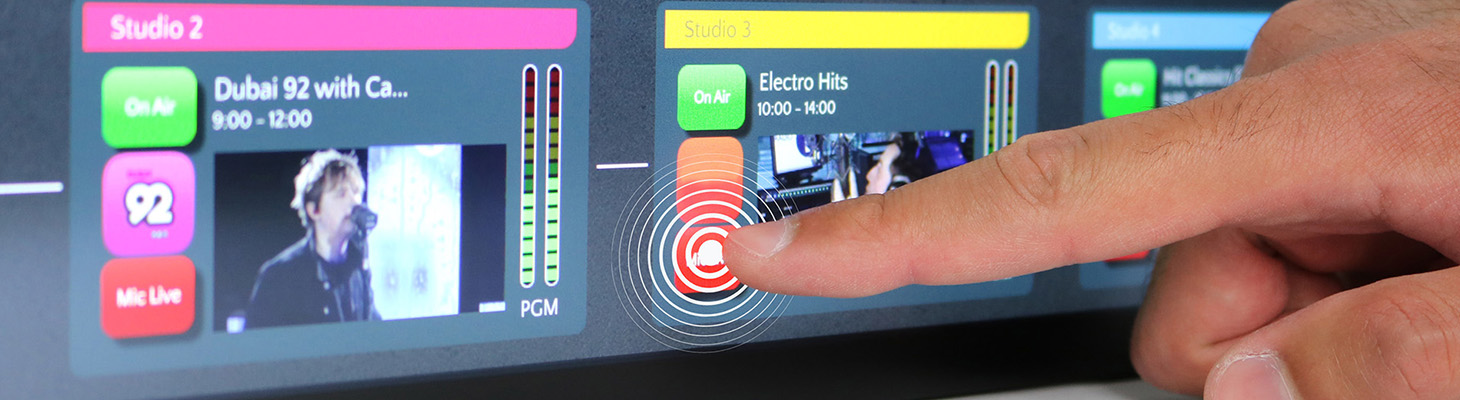
Rotary controls, haptics and touch: Designing the smart home interface of the future
Smart home interfaces have changed considerably as lighting, climate control, security, shading, entertainment and energy management have become increasingly connected.
Touchscreens are now a familiar part of that environment. They allow manufacturers to place multiple functions within a single interface and change controls according to the system or task. Yet removing physical interaction entirely can create its own usability problems.
People do not always want to stop and look at a screen before adjusting the lights or changing the temperature. Familiar actions often benefit from controls that can be felt as well as seen.
This is creating a new generation of smart home Human-Machine Interfaces (HMIs) that combine touchscreens with rotary controls, tactile inputs and haptic feedback. Rather than choosing between physical and digital control, manufacturers can select the interaction method that fits each task.
The engineering challenge is deciding which technologies will provide the right combination of usability, reliability, lifecycle performance and industrial design. For interfaces expected to remain installed for years, those decisions need to consider much more than how the controls feel during a product demonstration.
Why are tactile controls returning to digital interfaces?
Touchscreens provide enormous flexibility. One display can control lighting, heating, security and entertainment without requiring a separate physical control for every function.
Flat glass does remove some of the physical information people receive from traditional controls.
A mechanical button moves when pressed. A rotary control can be adjusted by feel. A conventional fader provides a physical position that the user can see and touch.
Touchscreens usually require more visual attention because the controls have no permanent physical shape.
Tactile and haptic technologies give manufacturers a way to introduce physical feedback without abandoning configurable digital interfaces.
For smart home and workplace automation HMIs, this creates opportunities to combine clean architectural design with controls that provide physical confirmation during everyday use.
What is a hybrid touch and tactile HMI?
A hybrid touch and tactile HMI combines a digital touchscreen with one or more forms of physical interaction.
The tactile element could be a rotary control, fader, button or haptic response generated when someone interacts with the touchscreen.
These controls do not necessarily need to operate independently from the digital interface. Their behaviour can be linked to software, allowing the physical control to change according to what appears on screen.
A rotary control could adjust lighting intensity when the lighting interface is open, for example, then control temperature when the user switches to the climate interface.
This gives manufacturers the adaptability of software-defined controls alongside a physical input that users can feel.
Where rotary controls work well in smart home interfaces
Rotary controls are particularly useful for values that users adjust across a continuous range.
Lighting intensity, temperature, audio volume and blind position are good examples. Turning a physical control can provide a familiar interaction for making gradual adjustments.
Traditional rotary encoders generally require a mechanical opening and mounting arrangement in the front panel. That can affect the appearance of the HMI and introduce additional mechanical considerations around sealing, assembly and cleaning.
Newer approaches can integrate rotary interaction more closely with the touchscreen.
Densitron's Tactila® tactile technologies include rotary controls designed to work directly with touchscreen interfaces. The passive on-screen component places the sensing technology behind the display, removing the need for drill-through holes or batteries in the control itself.
This allows manufacturers to retain a flat, sealed front surface while introducing physical rotary interaction.
The function of the rotary can also change through software, allowing one control to replace several fixed knobs in suitable applications.
Where haptic feedback fits into smart home control
Haptic feedback creates a physical sensation in response to an interaction.
On a touchscreen, this could take the form of a vibration or other tactile response when the user presses a virtual control.
The response confirms that the interface has recognised the input without requiring a traditional mechanical button.
Haptics can be particularly useful when manufacturers want to maintain a minimal glass interface. Instead of adding permanent physical controls for every function, selected touchscreen interactions can provide physical confirmation.
The response can also be programmed according to the interaction. Different actions can use different feedback characteristics, helping the physical response become part of the wider interface design.
This makes haptics suitable for smart home HMIs where industrial design calls for a clean surface but users can still benefit from physical confirmation.
When tactile faders make sense
Faders provide direct control over a continuous value and give the user a physical indication of position.
They are widely associated with professional audio and broadcast equipment, but the underlying interaction can also apply to other control systems.
In a smart environment, a fader-style interaction could be used for functions such as lighting levels, audio or another continuously adjustable setting.
Densitron's Tactila® portfolio includes tactile faders that can be bonded directly to a touchscreen. This allows physical adjustment to become part of the digital interface rather than requiring a completely separate control assembly.
The decision to use a fader should still be based on the workflow. A rotary may require less interface space and work well for frequent incremental adjustments, while a fader can make the current position of a parameter easier to understand physically.
How do you compare tactile faders and rotary encoders?
There is no universal answer to whether a tactile fader or rotary encoder will have a longer lifecycle.
Reliability depends on the specific control technology, construction, materials, mounting method, operating environment and expected number of interactions.
For an industrial or smart home control panel, manufacturers should therefore compare the individual component specifications and complete HMI design rather than assuming that one category of control will always outlast another.
The expected duty cycle is a useful starting point. A control used a few times each day has different lifecycle requirements from one used repeatedly throughout a working shift.
The physical mechanism also needs to be considered. Conventional mechanical controls contain moving components that can experience wear. Touchscreen-integrated tactile technologies can use a different mechanical architecture, potentially removing some of the openings, switches and front-panel components associated with traditional controls.
Environmental exposure can change the comparison again. Moisture, dust, contamination and cleaning requirements can influence the long-term performance of a control, particularly where its installation requires openings through the front surface.
The correct comparison is therefore between the complete control designs under the conditions in which they will operate.
Why sealed interfaces can support long-term reliability
The construction of the front surface can influence the durability of an HMI.
Traditional physical controls may require holes through the front panel for shafts, switches or other mechanical components. Those openings need to be designed and sealed appropriately for the intended environment.
Densitron's Tactila® architecture takes a different approach. Its touchscreen-integrated rotary technology uses a passive component on the front surface with sensing behind the display.
Removing the need for drill-through holes can support water-sealed designs and simplify the front-panel mechanics.
For smart home controls, this can also support the clean appearance expected from wall-mounted interfaces and premium automation systems.
The result is an HMI where tactile interaction does not necessarily require the industrial design compromises associated with traditional mechanical controls.
Designing controls around real household interactions
The best interaction method depends on what the homeowner is trying to do.
Some functions work naturally on a touchscreen. Checking energy consumption, changing a schedule or configuring a security system involves information that benefits from a visual interface.
Frequently adjusted settings can have different requirements.
A homeowner changing the lighting while entering a room may benefit from a rotary control they can adjust without concentrating on the display. Haptic feedback could confirm a virtual button press. More complex configuration can remain within the touchscreen UI.
This creates a hierarchy of interaction rather than forcing every function through the same input method.
The interface can then use touch for information-rich tasks and tactile interaction where physical feedback improves everyday control.
Building tactile controls into premium smart home design
Smart home HMIs form part of the interior as well as the technology infrastructure.
Wall-mounted controllers may remain visible in living rooms, kitchens, bedrooms and entrance areas for years. Size, materials, display quality and control design therefore influence how well the interface fits within the surrounding architecture.
Traditional banks of buttons can restrict the visual design and create a fixed appearance that is difficult to change later.
Touchscreens provide a cleaner alternative, but an entirely flat interface may remove physical interactions users find familiar.
Hybrid HMIs offer another option.
Slim TFT or OLED displays, edge-to-edge glass, PCAP touch and integrated tactile technologies can provide configurable digital controls while retaining selected physical interactions.
Densitron'ssmart home HMI technologies combine display, touch and tactile technologies for wall-mounted control panels, lighting and climate controls, access systems and other connected environments.
Designing controls for a long product lifecycle
A smart home interface can remain installed considerably longer than many consumer electronics products.
Manufacturers therefore need to think beyond the initial specification.
Display availability, tactile component availability, embedded electronics and software support can all affect the usable life of the product.
A highly specialised mechanical control may create difficulties if the component becomes unavailable several years into production. A more programmable architecture can potentially reduce the number of unique hardware components required across a product range.
Software-defined tactile controls can help here because one physical control can perform several functions depending on the current interface state.
Densitron supports long-lifecycle component availability across its smart home display and HMI offering, alongside customisation and engineering support for long-term deployments.
For OEMs, lifecycle planning should form part of HMI development alongside UX and industrial design.
Connecting tactile controls with smart home systems
The physical interface is only one part of a smart home HMI.
The controller also needs to communicate with lighting, climate, security, shading, entertainment and other systems.
Densitron's smart automation solutions support protocols including KNX, Zigbee, Z-Wave and Bluetooth, as well as Power over Ethernet.
Embedded computing can then connect the visual and tactile interface with the wider automation system.
This allows the control surface to respond dynamically to the current system state. A programmable rotary, for example, can change function according to the screen or system currently being controlled.
The combination of software, connectivity and physical interaction makes the HMI an active control point within the smart home rather than a static collection of switches.
Choosing between touch, haptics, rotaries and faders
The smart home interface of the future is unlikely to depend on a single interaction technology.
Touchscreens are well suited to information-rich and configurable controls. Haptics can add physical confirmation without introducing a permanent mechanical control. Rotaries provide familiar and precise adjustment for continuous values. Faders can provide direct physical control where position is useful to the interaction.
Manufacturers can select different technologies for different tasks within the same HMI.
The decision should account for frequency of use, required precision, available interface space, industrial design, expected lifecycle and the environmental conditions surrounding the installation.
This also allows physical interaction to be concentrated where it provides the greatest benefit rather than adding controls that have little purpose beyond product differentiation.
Key takeaways
- Hybrid smart home HMIs can combine touchscreens with haptics, rotary controls and tactile faders according to the interaction required.
- Comparing the lifecycle of tactile faders and rotary encoders requires assessment of mechanical endurance, environment, integration and component availability rather than assuming one technology is inherently more reliable.
- Touchscreen-integrated tactile controls can reduce the need for drill-through front-panel components and support sealed, minimal interface designs.
- Densitron combines TFT and OLED displays, PCAP touch, Tactila® technologies and embedded HMI expertise for smart home and workplace automation interfaces.
FAQs
What is a tactile smart home interface?
A tactile smart home interface combines digital controls with physical feedback. This can include rotary controls, buttons, faders or haptic responses integrated with a touchscreen HMI.
Are rotary controls more reliable than tactile faders?
Not necessarily. Reliability depends on the individual component, its mechanical design, expected duty cycle, mounting, environmental exposure and required service life. Manufacturers should compare rated endurance and application-specific testing for the controls under consideration.
How should you compare the lifecycle of a rotary encoder and tactile fader?
Compare their rated mechanical endurance, frequency of use, operating environment, sealing requirements, mounting method and long-term component availability. Testing should reproduce the expected use of the finished control panel as closely as possible.
What is haptic feedback in a smart home interface?
Haptic feedback creates a physical sensation when a user interacts with a digital control. It can confirm that a touchscreen input has been registered without requiring a conventional mechanical button.
Why use a rotary control with a touchscreen?
A rotary provides physical interaction for settings that benefit from continuous adjustment, such as lighting intensity, temperature or audio volume. Integrating it with a touchscreen also allows its function to change according to the current interface.
Can rotary controls be integrated into flat glass touchscreens?
Yes. Densitron's Tactila® technology can integrate rotary controls directly with touchscreen interfaces without requiring drill-through holes in the front glass. Sensing takes place behind the display while the on-screen component remains passive.
What are tactile faders used for?
Tactile faders provide physical control over continuous values. They are commonly associated with audio and broadcast systems but can be applied to other HMIs where direct adjustment and physical position are useful.
Can tactile controls work with smart home automation protocols?
The tactile control forms part of the HMI, while the wider control system handles communication with connected devices. Densitron's smart home solutions support technologies including KNX, Zigbee, Z-Wave, Bluetooth and Power over Ethernet.
Which tactile technology is best for smart home controls?
The appropriate technology depends on the interaction. Haptics can provide confirmation through a flat touchscreen, rotary controls suit frequent incremental adjustments and faders can work well where physical position forms part of the interaction.
Does Densitron provide custom smart home HMIs?
Yes. Densitron provides display, PCAP touch, tactile technology, embedded computing and HMI development for smart home and workplace automation applications. Solutions can use existing technologies or be customised around the requirements of the product.
Building smarter physical interaction into the connected home
Smart home interfaces need to balance two different requirements. Users expect the flexibility and visual quality of modern digital controls, but some everyday interactions still benefit from something they can physically feel.
Touch, haptics, rotaries and tactile faders give manufacturers a broader set of tools for designing those interactions.
The right combination depends on the application, expected lifecycle and physical environment. It should also account for how the HMI will look and operate years after installation, rather than concentrating solely on the initial user experience.
Densitron's smart home and workplace automation HMI solutions combine display engineering, PCAP touch, embedded computing and Tactila® tactile technologies for connected control interfaces.
For manufacturers developing the next generation of smart home controls, these technologies make it possible to retain physical interaction while moving towards cleaner, more configurable and software-defined interfaces.
Contact us
For more information about Densitron or any of our products and services please contact one of our regional offices or contact@densitron.com