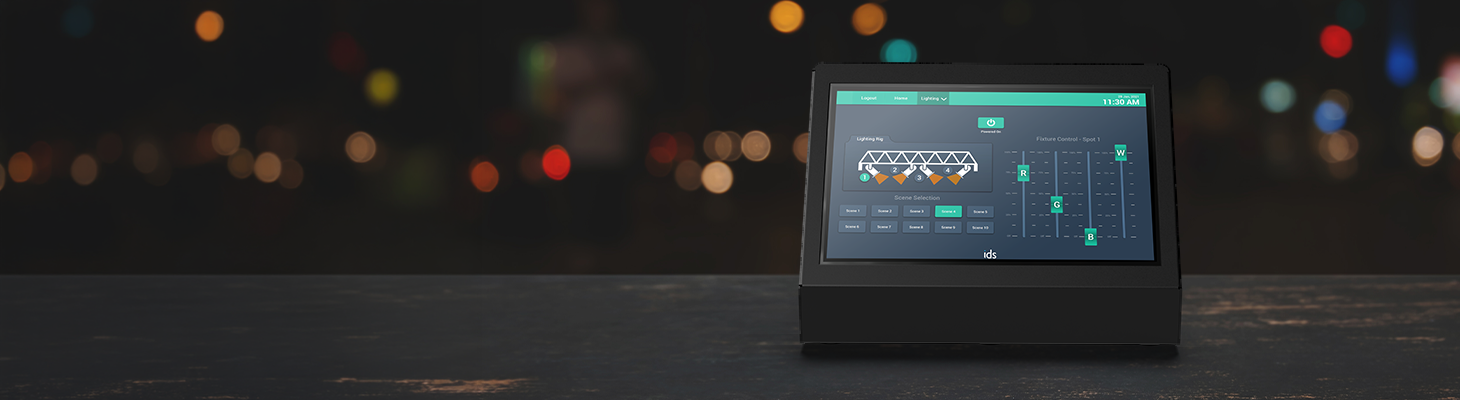
Making complex workflows simple: How IDS is redefining control across industries
As the world of broadcast and Pro AV continue to converge, our IDS solution has evolved from a clock and tally solution into a sophisticated, multi-vertical control and integration platform. Hear from Reuben Such, Global Business Development Director for IDS at Densitron, as he discusses how the powerful software system is redefining operational simplicity across industries.
Reuben, for those unfamiliar, what exactly is IDS — and how did it begin?
IDS originally started as a clock and tally system designed for radio environments. It was built to provide broadcasters with synchronized timing and tally information across studios — a simple but essential workflow tool.

As production environments became more complex, we extended IDS to include both hardware and software modules, controlling everything from within the complex workflow from automation to routers and everything in between. IDS soon evolved to other media domains and fast caught the attention of TV studios, who saw the benefit of a single, unified platform to manage disparate workflows. That’s when IDS truly began its journey from a timing system into a complete media technology control and integration platform.
How would you describe what IDS does today — and how it’s different from typical control systems?
IDS has evolved far beyond its humble beginnings, using the convergence between markets to accelerate its development. IDS can now be seen as a secondary control layer — an intelligent solution that brings multiple devices and workflows together, aggregating data and control signals from a wide variety of third-party devices. Regardless of source, IDS can bring all those applications together, creating simplified workflows and intuitive user experiences.
Flexibility is what makes IDS truly unique. It’s not tied to a single protocol, manufacturer, or vertical. IDS can sit above your existing infrastructure and allow you to visualize, automate, and interact with systems through a single, intuitive interface. You can use it to drive dynamic content, trigger automation events, or simply unify control of complex environments — all working harmoniously with your existing systems.
We often hear about the convergence of IT, Pro AV and broadcast. Where does IDS fit in that picture?
That convergence is at the heart of IDS’s direction. Broadcast and IT used to be separate worlds, but the boundaries have now dissolved. IDS acts as the connective tissue between them.
It’s common now for our system to be deployed not just by broadcast engineers, but also by a new demographic such as IT or Corporate AV teams who are working together on shared network infrastructures. IDS provides the control logic and user interface that makes these hybrid environments manageable, secure, and adaptable.
IDS clearly has a much wider relevance than broadcast now. What kinds of industries are adopting it?
That is one of the most exciting things about IDS. The same technology that powers a live TV control room is now being used in houses of worship, space agencies, Operational logistics, and even education or medical environments.
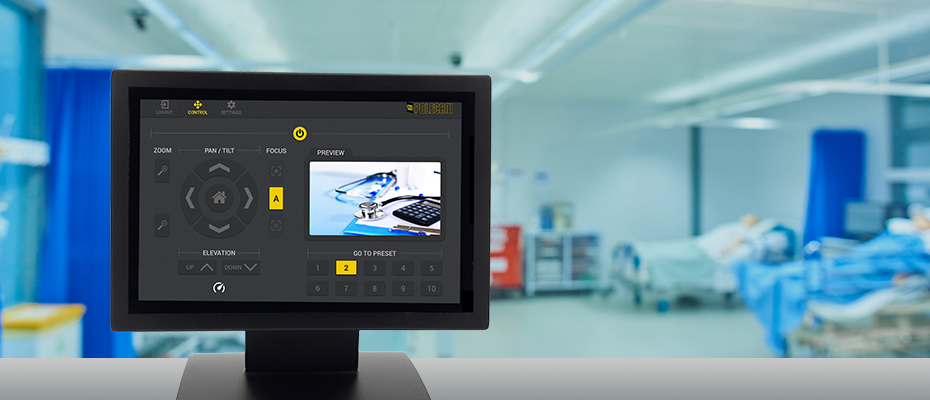
All these sectors share a common set of challenges: complex systems, multiple devices, and a need for reliability, simplicity and doing more with less. IDS provides a consistent way to integrate and control those systems. In a medical setting, IDS can drive an efficient and simplified workflow for users in a highly demanding environment.
There is a requirement to enable medical staff to provide simplified control of elements such as camera control of an operation, streaming a procedure to a training hospital, triggering a compliance recording or even enabling dynamic signage outside of theatre. All of these key elements are driven through one elegant UI presented on an IDS HMI hardware panel, fully customisable and created to provide streamlined experience.
IDS is a truly multi-vertical platform — and we are continuing to develop targeted solutions for a diverse array of applications, demonstrating to new customers what is achievable.
Can you share a bit about how IDS integrates with other technologies?
As alluded to, flexibility is at the heart of our integration strategy. IDS can talk to virtually any device that exposes an API or I/O interface. Whether that's modern IP systems or legacy hardware.
When integrating with a new or proprietary device, our specialist team analyse the API, define the control requirements, and develop custom drivers. Support is another key part of the offering – we provide SLAs for firmware and driver updates, which is very important for medical customers who require guaranteed uptime.
The result? IDS connects with your current devices, it evolves alongside your ecosystem, and it continues to reliably and powerfully perform, driving efficiency and creating simplicity in a complex workflow.
How is Densitron ensuring that the IDS story reaches beyond traditional broadcast audiences?
That is something we have been actively working on – taking IDS and demonstrating its value well beyond the broadcast environment. Our go-to-market approach has evolved to be solution-led, highlighting how IDS addresses specific operational challenges across multiple industries. We are now seeing growing interest and engagement from a diverse range of sectors, including healthcare, education, government, houses of worship, and critical control environments.
To support this, we are updating our website and marketing collateral to make the multi-vertical benefits of IDS clearer — introducing more targeted content and real-world use cases. We will be expanding our library of case studies to showcase this breadth, including recent deployments which we are excited to share more details of in due course.
Our partner network continues to be a key amplifier in our strategy, helping us extend reach through joint campaigns, regional roadshows and booth participation, and shared content initiatives that bring the IDS story to new audiences worldwide.
What’s next for IDS — both technically and strategically?
From a technical standpoint, we will continue enhancing IDS’s ability to control and visualize even more device types, becoming increasingly cloud-aware and data-driven, which allows for better analytics and automation.
From a strategy perspective, we are focused on collaboration and accessibility, building our global partner network, sharing educational content across platforms like LinkedIn, and ensuring new integration or driver releases are communicated in a way that’s useful for both engineers and users.
Ultimately, it is all about delivering clarity. IDS makes the complex simple — and our mission is to make sure that simplicity resonates with every industry we serve.
Finally, how would you summarize the IDS value proposition in one line?
IDS makes complex workflows simple — giving you unified control, flexibility, and confidence, no matter what industry you are in, what technology you are using, and what application.
The evolution of IDS reflects a broader shift in media and technology integration: systems are getting more connected, environments more complex, and teams more interdisciplinary. Through its open architecture, adaptable control capabilities, and user-focused design, IDS continues to stand out as the bridge that brings simplicity to complexity — across every vertical.